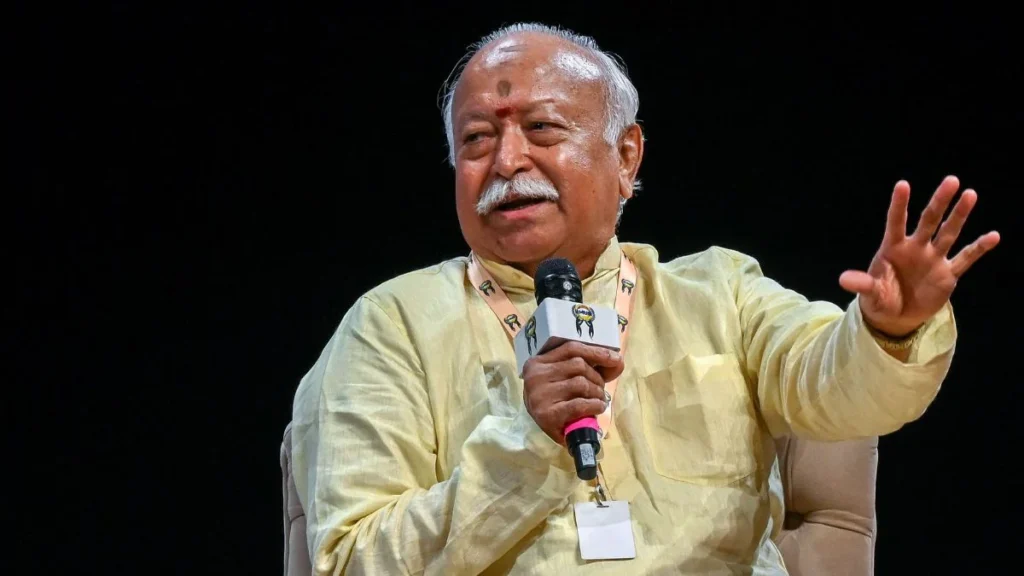
Mumbai, August 6, 2026 — In a candid interaction with young students on Thursday, RSS chief Mohan Bhagwat firmly rejected the idea that India’s Gen Z becomes anti-national simply by raising its voice. Speaking at the 15th anniversary celebrations of India’s International Movement to Unite Nations (IIMUN) at the Nita Mukesh Ambani Cultural Centre, he told a gathering of around 2,000 Gen Z and Gen Alpha participants that the younger generation belongs to the country and that agitation does not erase that belonging.
Want to make it clear that if Gen Z engages in any agitation, they are not anti-national. They are our own people; they are our next generation,” Bhagwat said. He stressed that a sense of belonging and mutual respect must form the foundation of any conversation between generations. Only then, he argued, can real dialogue happen — one in which elders understand the concerns of the young and the young, in turn, understand the perspective of those who came before them.
The remarks came against the backdrop of recent student-led protests, particularly over alleged irregularities and paper leaks in examinations such as NEET. Those demonstrations had grown intense in the national capital and elsewhere, with reports of police action including the use of tear gas and, in some accounts, pellet guns. Bhagwat was careful not to pronounce judgment on the specific incidents. He said he did not have complete, verified information about what had transpired between the police and the protesters, and therefore preferred not to draw conclusions. At the same time, he made his personal stance clear: “I will trust Gen Z blindly.”
He described the grievances being voiced by young people — especially those related to the education system — as genuine. “There is a lot that needs to be done in Indian education; since it’s not happening, it’s being talked about,” he observed. Protest, in his view, is itself a form of dialogue in a democracy. When concerns are not heard through quieter channels, people may turn to agitation. The purpose of that agitation, however, should be to build consensus and correct systems, not to deepen divisions or target individuals.
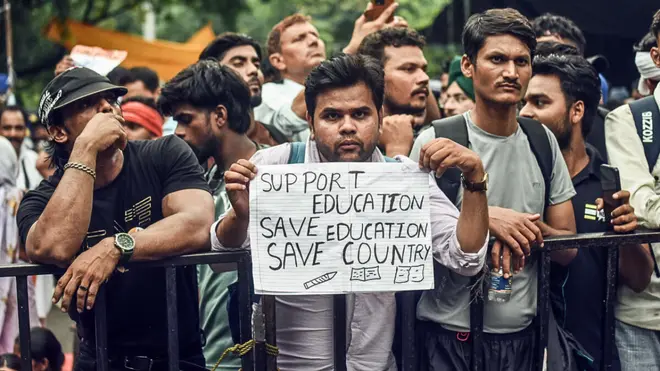
Bhagwat repeatedly returned to the character of the new generation. He said Gen Z and Gen Alpha are more honest than the existing generation. Appeals to patriotism and a spirit of service, he believed, find a genuine response in them. Unlike earlier generations that often accepted the word of elders without question, today’s young people ask for logical answers and also for affection and respect. “When we were at the age of Gen Z, we would listen to our elders. We never used to question. Now Gen Z wants logical answers,” he noted.
He was clear that he would never tell young people they should not protest. Democracy, he said, provides ways of going about it. The methods laid out in the Constitution and the ideas of B.R. Ambedkar remain the framework. If youth are shouting, he suggested, it is usually not for the sake of opposition but for improvement. The task before society is to recognise that relationship of belonging and respond with dialogue rather than labels.
The interaction itself was freewheeling. Students raised questions on education, jobs, reservation, social media, and even broader issues of national life. Bhagwat engaged with the questions directly, at one point picking up a contemporary expression from the audience and trying it out to laughter and applause. The tone of the evening was not one of lecture but of conversation — an older leader speaking to the generation that will inherit the country’s future.
Bhagwat’s comments carry weight because of the organisation he leads and the moment in which they were delivered. In recent weeks, sections of public discourse had begun to question the motives of student protesters, sometimes casting them in an unfavourable light. By stating so plainly that these young people are “our own” and that protest does not make them anti-national, the RSS chief sought to shift the conversation toward understanding and engagement.
He also touched on the practical need for better communication. Dialogue should always be the first step, he said. When something goes wrong that should not have happened, there is usually a deficiency somewhere that needs fixing. Whose responsibility it is may be debated later; the more important point is that the deficiency must be addressed.
As the interaction drew to a close, the emphasis remained on relationship rather than confrontation. The younger generation asks questions and seeks logical answers. The older generation, Bhagwat suggested, must answer with both reason and warmth. Only then can the dialogue that democracy requires truly take place.
Sources:
India Today, The Indian Express, The Times of India, LiveMint, The Statesman, Firstpost, Times Now, NDTV, Deccan Herald, Outlook India, The Hindu, PTI, ANI (reports dated August 6, 2026).
@Rohit Manral