
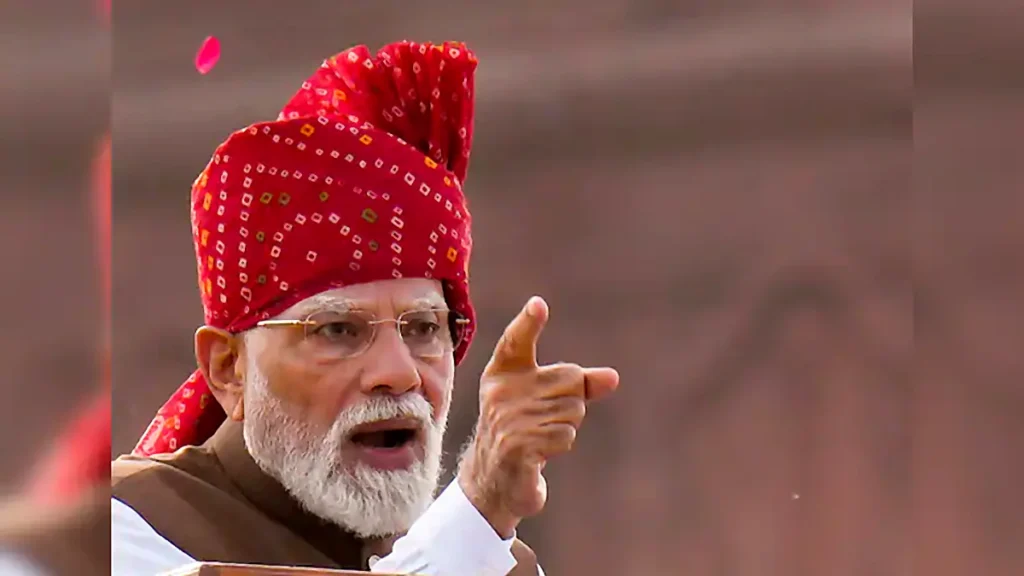
In the middle of a global mess, Prime Minister Narendra Modi has gone back to an old idea that still resonates deeply with many Indians: look after your own house first. Speaking at a public meeting in Hyderabad in May this year, he made a straightforward appeal. Don’t buy gold for a year if you can help it. Don’t hold destination weddings abroad. Cut down on fuel, try working from home where possible, use public transport, and buy more of what is made in India.
The message landed with unusual force because of the timing. Tensions in West Asia had pushed crude oil prices sharply higher. India imports most of its oil and almost all of its gold. Both are paid for in dollars. When those bills rise together, pressure builds on the rupee and on the country’s foreign exchange reserves. Modi framed the appeal not as government instruction but as a shared national responsibility.
“Gold purchases are another area where foreign exchange is used extensively,” he said. “In the national interest, we must resolve not to purchase gold for a year.” He pointed out that middle-class families were increasingly choosing to celebrate weddings overseas, sending large amounts of money out of the country. Hold the celebrations here instead, he urged. India has plenty of beautiful places. The money stays at home and supports local businesses.
This was not an isolated remark. It fitted into a wider set of suggestions he made around the same time: reduce cooking oil use, shift towards natural farming, carpool, prefer metros and public transport, and lean harder on swadeshi products. The language was familiar. It echoed the self-reliance theme he has returned to during earlier crises, including the pandemic years.
What made the pitch sharper this time was the backdrop of solid economic numbers. India has continued to post strong growth even as many other large economies have struggled. The latest figures for the April-June quarter of 2026-27 showed real GDP expanding 7.8 per cent, beating the Reserve Bank’s own forecast. Manufacturing and services held up well. Investment activity remained healthy. The country has managed to keep expanding while absorbing external shocks that would have slowed others more sharply.
That combination—steady growth at home alongside external pressure—gave Modi room to talk about discipline without sounding defensive. The economy is performing, he implied, but performance alone is not enough if foreign exchange is leaking out through non-essential imports and overseas spending. Ordinary citizens could help by changing a few habits for a while.
The cultural side of the gold appeal was never going to be simple. Gold is woven into Indian weddings, festivals and family savings in ways that go far beyond investment. A bride without jewellery still feels incomplete to many families. Destination weddings in Thailand, Dubai or Europe have become status markers for a section of the middle class. Asking people to pause both was asking them to set tradition and aspiration aside, at least temporarily.
Yet the response appears to have been more positive than many expected. In his Mann Ki Baat address in late June, Modi thanked people for listening. Families had written to him saying they had decided not to buy new gold for weddings this year and would instead melt and reshape older pieces. Others said they had postponed foreign travel. Small changes, he noted, add up when millions make them.
Economists and market watchers saw the logic clearly. Gold imports had climbed to record levels in the previous financial year, running into tens of billions of dollars. Combined with a heavier oil bill, the pressure on the current account and the currency was real. Voluntary restraint could ease that pressure without the need for heavier administrative measures. Higher import duties on gold followed soon after the speech, reinforcing the signal.
The swadeshi element runs through all of it. Buying local, celebrating local, spending local—these are not new ideas in Indian political speech. What is different is the attempt to link everyday personal choices directly to macroeconomic stability at a time when the country is still growing at a healthy clip. Growth gives confidence. Restraint is presented as the way to protect that growth from external turbulence.
Critics will say appeals of this kind are easier to make than to sustain. Gold demand has deep cultural roots. Destination weddings are unlikely to disappear overnight. Fuel consumption depends on infrastructure as much as individual will. Yet the fact that the Prime Minister chose to make the case publicly, and later acknowledged the response, shows he believes public participation still matters.
For now, the message is clear enough. India’s economy has shown resilience. The numbers for the first quarter of the current financial year confirm it. But resilience is not automatic. In a world where supply chains can snap and oil prices can jump, a bit of collective caution on gold, foreign travel and imported goods is being offered as one practical way for citizens to contribute. Whether the habit sticks beyond the immediate crisis will decide how lasting this latest swadeshi push turns out to be.
Sources:
- India Today reports on PM Modi’s Hyderabad and subsequent speeches (May 2026)
- Hindustan Times, Business Standard and Times of India coverage of the gold and foreign travel appeals
- ANI and Mann Ki Baat transcript references from June 2026
- Ministry of Statistics and Programme Implementation GDP data release for Q1 2026-27 (31 August 2026)
- Financial Express, Indian Express and other contemporaneous reporting on economic growth figures
@Rohit Manral