
Rahul Gandhi’s Latest Push: Vote Chori, Ramlila Rally and the Debate Challenge
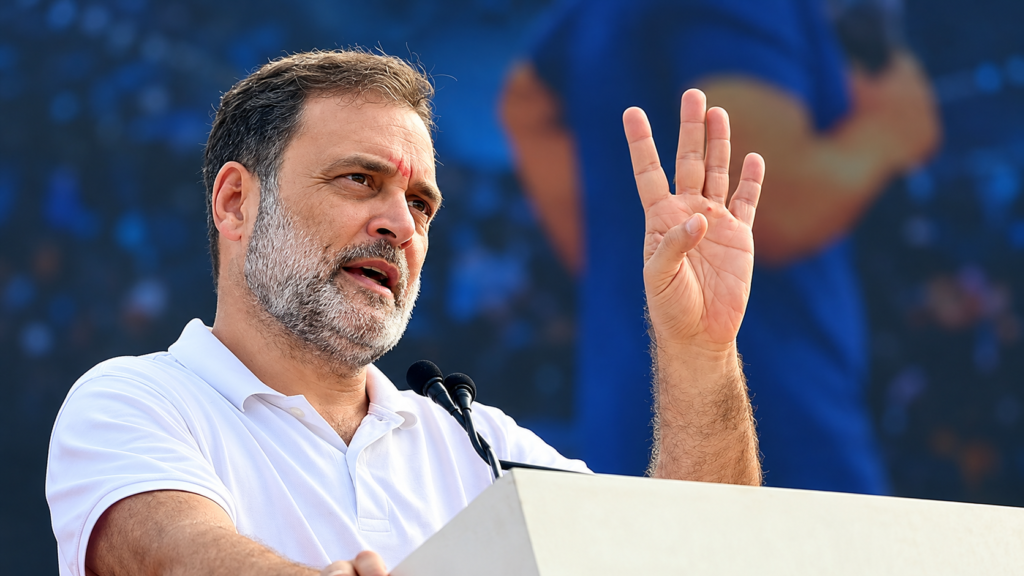
The Leader of Opposition is once again in the middle of the noise, this time with a sharp focus on what he calls “vote chori” — alleged large-scale voter list deletions and election manipulation. On November 1 the INDIA bloc held a big rally at Delhi’s Ramlila Maidan. Rahul was front and centre. He told the crowd that Chief Election Commissioner Gyanesh Kumar had committed vote theft and would eventually go to jail. He claimed around 13.5 crore voters had been improperly removed from the rolls. Mamata Banerjee, Akhilesh Yadav and Congress president Mallikarjun Kharge were there too. The march earlier in the day from Connaught Place area to the Maidan drew a mixed crowd — party workers, some students, and people who just turned up. Shops in Connaught Place stayed shut that day, which Rahul later said hurt ordinary traders and was done deliberately by the BJP. The “Vote Bachao, Desh Bachao” line has become the opposition’s main slogan for now. They want the CEC’s resignation and a full debate on the Special Intensive Revision of electoral rolls and the reliability of EVMs. Rahul has been repeating that the 2024 Lok Sabha results were not clean and that the same pattern is continuing. Then came the personal challenge. After Prime Minister Modi accused the opposition of being an obstructionist force that spreads rumours on social media, Rahul hit back. He posted that foreign social media fully backs the Prime Minister and challenged him to an open debate. Sit across a table, he said. Media will be there, young people will be there. You can even make Mohan Bhagwat the judge. He listed topics — the financial system, the US deal, why the Adani case was closed, Epstein references, and more. He ended with a Happy Diwali message. The post got heavy traction. Amit Shah, meanwhile, told a gathering in Hyderabad that Rahul Gandhi will never become Prime Minister and accused Congress of opposing the electoral roll revision only to protect its vote bank. Finance Minister Nirmala Sitharaman has now formally challenged Rahul to debate SIR and EVMs inside Parliament. She pointed out that Amit Shah has already offered a special session if the opposition wants one. So the ball is in their court on whether they actually take it up on the floor of the House or keep it on the streets and social media. This is not a sudden shift. For months Rahul has been pushing the vote theft narrative. He has spoken about it in Parliament, at press conferences, and during coordination meetings with other INDIA leaders. At one recent internal meeting he told colleagues that when the campaign started only about 20 percent of people believed the claim, but now the number is much higher. He has also been telling the alliance to stay ready to mobilise within 24 hours if needed. There have been other smaller stories around him. A UP court recently acquitted him in an old 2018 defamation case related to remarks against Amit Shah. His convoy had a collision with an ambulance on the Purvanchal Expressway earlier, with some injuries reported. He made a trip to Vietnam that the BJP tried to turn into an issue. He has also spoken about alleged government interference in the Tata Sons matter. The bigger picture is that Rahul is trying to keep the opposition united around one clear issue — trust in the electoral system. Whether the Ramlila Maidan show of strength turns into sustained public pressure is the real test. Urban turnout was not massive, and the BJP has dismissed the whole thing as an attempt to create anarchy and refuse to accept electoral defeat. Still, the fact that multiple opposition parties showed up together and that the “vote chori” phrase is now part of everyday political conversation means the campaign has at least registered. For now Rahul is doing what he does best in opposition mode — keep attacking, keep the issue alive, and force the other side to respond. The debate challenge is still hanging. Whether Modi or the government takes it up in any form remains to be seen. The streets and the television studios will stay busy either way. Sources: Business Standard, Economic Times, The Hindu, NDTV, Indian Express, National Herald, and recent public statements and social media posts by Rahul Gandhi and other political leaders. @Rohit Manral
Acted ‘unanimously’ on electoral roll revision orders: Election Commission tells Supreme Court
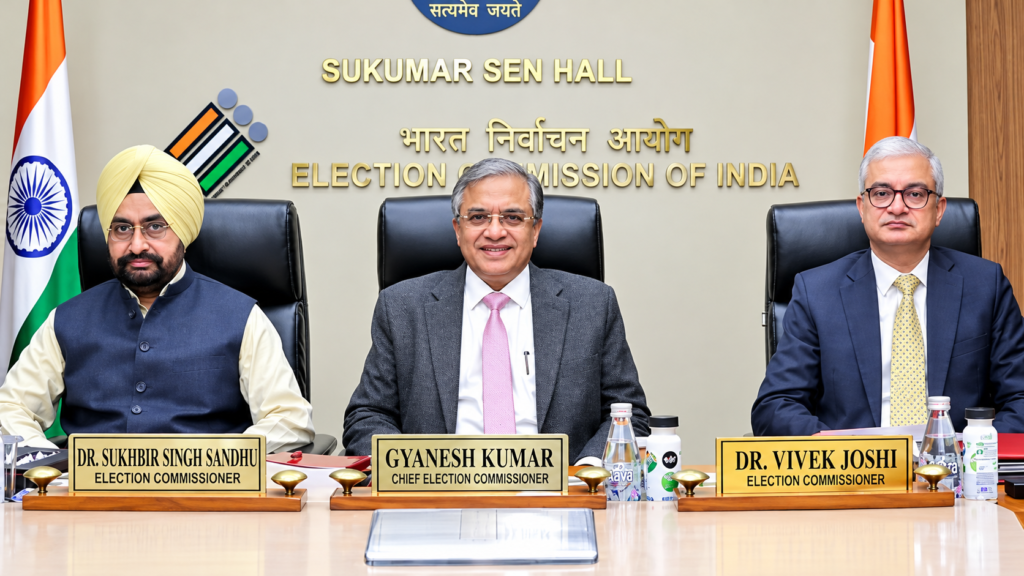
New Delhi: The Election Commission has told the Supreme Court that every single order on the Special Intensive Revision of electoral rolls was cleared by all three members together. No one acted alone. In an affidavit filed Monday, the Commission said the three main SIR orders — 24 June 2025, 27 October 2025 and 14 May 2026 — were issued only after full agreement among Chief Election Commissioner Gyanesh Kumar and the two Election Commissioners, Sukhbir Singh Sandhu and Vivek Joshi. The affidavit itself carries the same unanimous stamp. All three approved it before it went to court. This comes against petitions that claim the CEC was taking decisions on his own and want him restrained. One petition is from activist Rakesh Kumar Singh. Others have come from Rahul Gandhi and several Opposition leaders. A bench led by Chief Justice Surya Kant is set to hear the matters today. The Commission’s reply is simple. It says the whole case rests on one newspaper report and that newspaper stories about internal differences cannot be treated as evidence in court. Individual remarks, questions or notes written while a file is moving around are not final decisions, the affidavit makes clear. Files normally go first to one Election Commissioner, then the other, and only after that to the CEC. Urgent approvals can be taken on email and put on the file later, but the actual orders that get issued carry all three signatures. On Form 6, the form people use to get their names added to the voter list, the Commission is firm. None of the SIR orders changed that form. Only the Central government can amend Form 6. What was adjusted was a separate declaration used just for the SIR exercise. Calling that a change to Form 6 is wrong, the Commission says. It also confirms something that had come out earlier. The two Election Commissioners did write separately to Cabinet Secretary T.V. Somanathan about an internal work-allocation order. That order was issued by an Additional Secretary on deputation, was never put into effect, and was stopped after the two commissioners issued a joint direction. The Commission maintains the SIR itself is legal and was done the right way. It points to the Supreme Court’s own order of 27 May this year that upheld the exercise in Bihar. Eligible people still have the chance to enrol. In most cases Booth Level Officers will collect papers from homes. Hearings will be rare and preferably online. No name can be added or removed on the system without a proper order from the Electoral Registration Officer. The Commission also says any request to stop the CEC from working is not maintainable. Three members are there so that if they disagree, a majority can decide under the 2023 law. Decisions are supposed to be unanimous when possible. Freezing one member because of newspaper reports would go against that system. The SIR has been under fire for months over large deletions and questions about how new voters were added. The Commission’s stand in court is that the key orders were collective, the process stayed within the rules, and genuine voters still have the door open. Whether the court accepts this explanation will be clear once the hearing begins. For now the Election Commission has put its position on record in plain terms: the three SIR orders were unanimous, Form 6 was not rewritten by them, and the decision-making stayed inside the framework meant for a three-member body. Sources: Election Commission affidavit in the Supreme Court; The Indian Express, The Tribune, LiveLaw, Economic Times, India Today, PTI reports. @Rohit Manral